
India's economic growth forecast for 2025 has been revised downward to 6.3 per cent, and despite a projected moderation, the country remains one of the fastest-growing large economies, supported by resilient consumption and government spending, the United Nations has said.

The heightened global uncertainty due to the US "reciprocal tariffs" on India may cause near-term corrections and market turbulence, but the long-term outlook remains constructive, market experts said on Thursday. The US has announced 27 per cent reciprocal tariffs on India, citing high import duties imposed by New Delhi on American goods.

'I was in the US, where I met top executives of HP and Dell, and they are very keen to come to India.' 'Acer and ASUS have also evinced interest.'

From the rollback of customs duty on key electronic components to fast tracking delivery of goods imported from China, players are looking for incentives on several counts.

Hindustan Aeronautics (HAL) is one of the largest beneficiaries of the defence indigenisation programme. The aerospace Public Sector Undertaking (PSU) has just received a new tender for 97 Light Combat Aircraft (LCA) Tejas Mk1A, and it is already servicing an earlier order for 83 LCA aircraft. The new order is worth around Rs 65,000 crore with a 65 per cent indigenisation component, whereas the earlier order (February 21) was worth Rs 45,700 crore with 55 per cent indigenisation.

Post-election capital expenditure (capex) has been weak at 2 per cent year-on-year (Y-o-Y) in M9FY25. The FY25 revised estimates (RE) indicate 7 per cent growth in FY25 against FY24, implying 21 per cent Y-o-Y growth in Q4FY25 government capex.

'Retail investors, who had not seen such a massive correction in the SMID universe since COVID-19, are witnessing something like this for the first time. Panic profit booking may continue.'

HAL, BEL and MDL feature on Sipri's list of the 100 largest arms producers in the world.

'Three manufacturing sectors can create jobs by the million: Apparel, food, and electronic assembly.' 'Let's talk to them and ask them what it would take to scale by a factor of ten,' suggests Naushad Forbes.

'The facility works on Apple's iPhone and everything is damaged -- CNC machines, computers and CCTVs worth crores.'

While the capital spending is being maintained at 3.1 per cent of the GDP, a little more would have boosted economic growth even further, suggests Rajiv Memani.


'We are not asking for incentives, but at least taxation can be aligned such that the rupee tax on consumers remains the same.'

The government is busy strategising ways to revive the domestic mobile device industry as Chinese firms have grabbed a large chunk of the handset market. The idea is to minimise competition from Chinese mobile players in the entry level or sub-Rs 10,000 category, according to a senior government official familiar with the plans. While discussions on the strategy are on, there's a growing consensus within the government that the lower end of the market should be reserved only for the domestic players, the official said.

Crisil Ratings on Wednesday projected India's GDP growth at 6.8 per cent in the next fiscal and said the country will become an upper middle-income nation by 2031 with the economy doubling to $7 trillion. In its India Outlook report, Crisil said the Indian economy will take support from domestic structural reforms and cyclical levers and can retain -- perhaps even improve -- its growth prospects to become the third largest economy by 2031. "After a better-than-expected 7.6 per cent this fiscal, India's real GDP growth will likely moderate to 6.8 per cent in fiscal 2025," said the Crisil India Outlook report.

The Budget 2025-26 meets the expectations of fiscal consolidation, maintaining capital expenditure, and boosting consumption through tax cuts.

If reports that Apple Inc plans to triple its iPhone production in India come true, it is likely to help the country become a supply hub for the American company. There are some 190 Apple suppliers globally, but only 12 have manufacturing facilities in India now. Apple's strategy is to focus on India and a clutch of other countries as it diversifies its supply chain out of China.
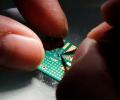
Foundries in Taiwan account for more than 75 per cent of the chips that mobile devices made in India need, according to estimates by the Indian Cellular and Electronics Association (ICEA), which represents global and domestic manufacturers. The number is slightly lower, 60 per cent, if one considers all chips -- those of consumer electronics, PCs, laptops, autos, etc. This ties in with the fact that foundries in Taiwan, led by TSMC, account for over 70 per cent of the world's microchip supply, according to estimates by Gartner.

The ministry of defence in September 2021 signed a Rs 21,935-crore contract with Airbus Defense and Space SA, Spain for supply of 56 aircraft.

'Why has Maharashtra slipped up over the past couple of decades?' 'Not only is this question critical for residents of the state, but given that it accounts for 14% of India's GDP, a faster-growing Maharashtra implies a faster-growing India as well, point out Shishir Gupta and Rishita Sachdeva.

Siemens's share price has lost ground in the past few sessions following weak management commentary. The management indicated challenges to the growth outlook due to stagnant private capex and concerns over semiconductor shortages for digital industries. Government infra-spending may regain momentum from January 2025.

Although the company has shown willingness to talk to its workers and accept their key demands, it is CITU that is causing a roadblock to a solution.

This Budget will be a litmus test of the government's resolve to ensure Make in India strategy works

Zaggle Prepaid, Cyient DLM, Healthvista India, Rashi Peripherals and Vishwaraj Sugar Industries have obtained the green signal to launch their initial public offerings (IPOs). The approvals come at a time when capital raising by way of IPOs has slowed to a crawl, with only four issues hitting the market so far this calendar year. Recently, the Securities and Exchange Board of India (Sebi) issued final observation letters on their draft red herring prospectuses (DRHPs), which is akin to getting approval to hit the markets.
Hughes Software Systems Limited (HSS), a subsidiary of the US based Hughes Network Systems (HNS), announced yesterday that Flextronics

Of the total proposed allocation, over Rs 1 lakh crore is meant for BSNL and MTNL-related expenses, including Rs 82,916 crore infusion in BSNL for technology upgradation and restructuring at BSNL.

Out of 24,230 IIT and NIT grads, about 8,000 students didn't find any takers during campus placement drives this year.

Fundraising momentum is expected to accelerate further in the New Year, potentially surpassing 2024's record figures

India's merchandise exports in October rose by 17.25 per cent to $39.2 billion against $33.43 billion a year ago, according to government data released on Thursday. Imports increased by 3.9 per cent to $66.34 billion in October compared to $63.86 billion in the year-ago period.

'It is in electronics that the gap between where we are and where we need to be is most obvious and most persistent.' 'It is not only a national security issue, but also a commercial issue,' argues Rajeev Srinivasan.

With Donald Trump all set to become US president, Indian exporters may face high customs duties for goods like automobiles, textiles and pharmaceuticals if the new US administration decides to pursue the 'America First' agenda, opined trade experts. Experts also said that Trump could also tighten H-1B visa rules, impacting costs and growth for Indian IT firms. Over 80 per cent of India's IT export earnings come from the US, making it vulnerable to changes in visa policies.

In a year bookended by intractable conflicts and geopolitical fragmentation, India focused on ramping up military prowess by broadly firming up defence procurement worth Rs 4.22 lakh crore even as Indian and Chinese militaries completed pulling back their troops from border face-off points in eastern Ladakh.

It, however, does not manufacture devices on its own and rather does it through contract manufacturers.

Recently, Prime Minister Narendra Modi met over 40 CEOs across broad swathes of industry, ranging from makers of mobile devices, auto components, food products to telecom networking equipment and pharmaceuticals. The agenda: To discuss how to make India an integral part of the global supply chain. The focus of the discussion would be the much touted yet not so well understood production-linked incentive scheme (PLI), the centrepiece of the government's drive to massively boost the manufacturing sector. To do so, the government has created a war chest of over Rs 197,000 crore to be paid out as incentives to over 14 industries in five years. There are three objectives to the scheme, two explicitly stated, one implied.

Brazilian authorities have rescued 163 workers from conditions similar to 'slavery' at a construction site for a factory of Chinese electric vehicle company Build Your Dreams (BYD) in Camacari, Bahia.

While the tax holiday for the factory coming to an end might be a factor, many say the business model of Microsoft (which acquired Nokia's handset division last year), as well as freebies offered by the Vietnamese government, might also have played a role.

Bengaluru-based Sunny Gupta had been searching for a laptop for months. In August, while sitting at a coffee shop, he decided to order an Acer Predator laptop - typically priced between Rs 95,000 and Rs 2.5 lakh - through the quick-commerce (q-com) platform Flipkart Minutes. "It took exactly 13 minutes from payment to receiving it at the Starbucks I ordered it to," he wrote in a now-viral post on social media platform X.
Mining mogul Anil Agarwal-led Vedanta Resources' credit profile will unlikely be weighed down by the group's planned Rs 1.54 lakh crore foray into semiconductor manufacturing, S&P Global Ratings said on Monday. "This is because the company has reiterated that the $20 billion related investment will be carried out outside of Vedanta Resources. "The business will be undertaken in a separate entity under Vedanta Resources' holding company Volcan Investments Ltd," it said.
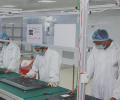
Dixon Technologies right now is a beehive of activity. It is building a new facility in Noida to make 1.3 million laptops for Taiwanese PC maker Acer. The facility must be up and running in four months. The pace of activity will only increase. Last week Dixon won a similar contract from Lenovo, the Chinese personal computer maker and the third largest information technology (IT) hardware brand in India, to assemble laptops and notebooks. Though the clientele in these two cases is Taiwanese and Chinese, Dixon is a company reaching for the stars with its feet planted firmly in the Indian government's policy.

Tata Electronics on Saturday began the construction of its Rs 27,000-crore chip assembly plant in Assam, which is expected to become operational next year and create 27,000 jobs initially. The plant will produce 4.83 crore chips per day using indigenously-developed technologies. The plant's Bhumi Pujan (foundation stone laying) ceremony was held at the project site at Jagiroad in Morigaon district in the presence of Assam Chief Minister Himanta Biswa Sarma and Tata Sons Chairman N Chandrasekaran.
 © 2026 Rediff.com - Advertise with us - Disclaimer - Privacy Policy - Sitemap - Feedback - About us - Terms of use - Grievances